Last updated: October 27, 2026
Quick answer: yes, often, but usually only for covered parts of the bill. Pet insurance often covers emergency vet visits, but the exact reimbursement depends on the policy. The emergency vet exam fee may or may not be reimbursed, while diagnostics, surgery, hospitalization, and stabilization treatment are often treated differently from one plan to another.
This is information, not financial advice. Because policy language, reimbursement rules, and state or country rules differ, a qualified adviser or the insurer should confirm how a specific policy applies to your pet. The North American Pet Health Insurance Association and your local state insurance department or equivalent consumer regulator can also help explain common terms and complaint channels.
Key takeaways
- Emergency care is usually handled as part of an accident-and-illness policy, but the exact reimbursement depends on the contract.
- The exam fee at the ER is a common gray area; some policies include it, some exclude it, and some cover it only when another covered service follows.
- After-hours care, diagnostics, surgery, and overnight hospitalization can be treated differently.
- A policy with a high reimbursement rate still may not help much if the visit falls under a waiting period, deductible, or exclusion.
- Check the plan’s terms before the emergency if you can, because the discharge desk is too late for surprises.
What “emergency vet visit” usually means in pet insurance
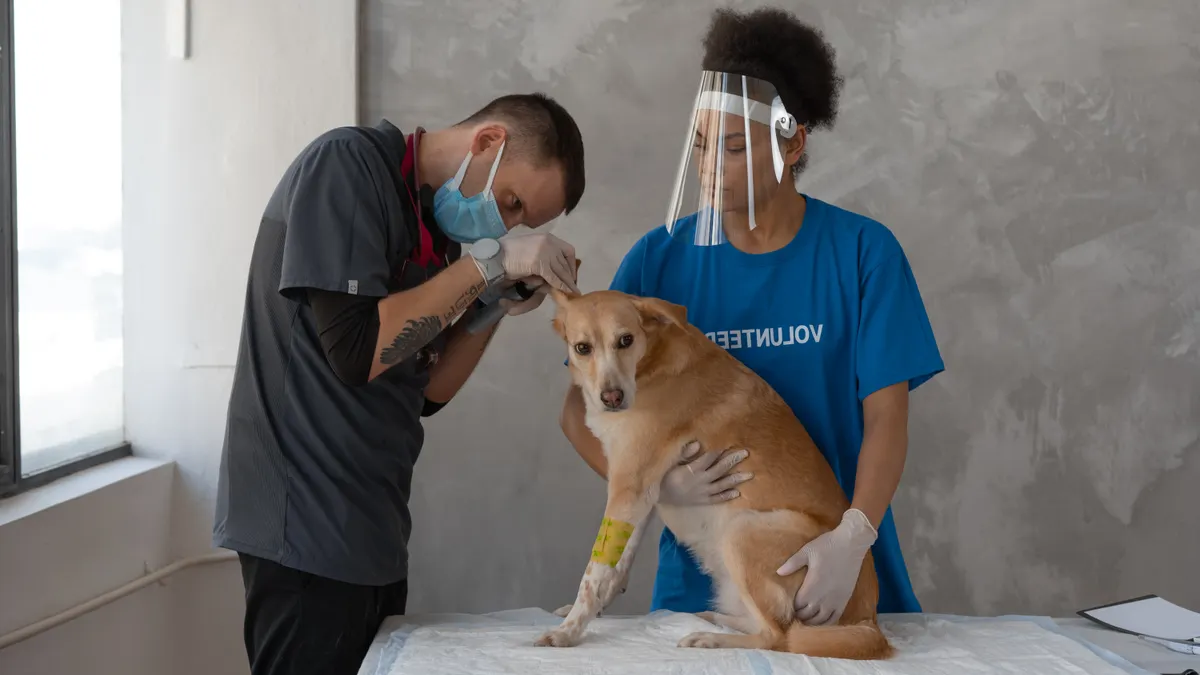
An emergency vet visit is usually any unscheduled trip to an emergency hospital, 24-hour clinic, or after-hours veterinary service for a sudden illness or injury. That can include triage, a physical exam, X-rays, bloodwork, IV fluids, pain control, surgery, and a hospital stay of one night or longer.
Most pet insurance policies do not price the visit as a single item. They break it into billable parts. That matters because the policy may treat an ER exam fee differently from hospitalization, diagnostic testing, or surgery. A reader who assumes “emergency” automatically means “covered” can end up with a claim that is only partly reimbursed.
The standard term of art is reimbursement, which means the insurer pays back a covered share after the veterinarian bills you and you submit a claim. That is not the same as point-of-sale payment. Many pet owners see the full invoice first and only later learn which line items count under the policy.
A useful starting point is the insurer’s benefit schedule and claim rules, then the policy wording itself. If a clause says an exam fee is excluded, the fact that the visit was urgent does not change that wording. If a clause says accident-and-illness care is covered after a 14-day waiting period, the emergency visit still has to fall outside that waiting period before any coverage can begin.
For a plain-English breakdown of policies, exclusions, and reimbursement, the hub article on what pet insurance covers is the right companion piece.
Which parts of an ER bill are often covered?
Emergency care is often covered in pieces, not as one bundled event. That is the part many generic articles miss. A claim can be partly approved and partly denied from the same 24-hour visit.
Here is how the common bill lines tend to work:
- ER exam fee: This is the initial veterinary exam or triage charge. Some policies cover it, some do not, and some only reimburse it when the exam leads to treatment for a covered condition.
- After-hours care: This is the surcharge for being seen at night, on weekends, or on holidays. Some insurers treat it as part of the visit fee; others treat it as an admin or convenience charge and exclude it.
- Diagnostics: X-rays, ultrasound, blood chemistry, urinalysis, and similar tests are often covered when they are needed to diagnose a covered accident or illness. If the diagnosis is for a preexisting condition, coverage can change.
- Stabilization treatment: IV fluids, oxygen, anti-nausea medication, pain relief, and wound management are often the first line of emergency care. These services are commonly tied to the underlying condition, so the condition itself matters.
- Surgery: If the emergency leads to surgery, the procedure is often covered under accident-and-illness benefits when the underlying issue is eligible.
- Overnight hospitalization: A hospital cage, oxygen cage, ICU monitoring, or 24-hour nursing care may be covered if the policy covers the underlying emergency and does not exclude the stay.
The practical question is not “Was it emergency care?” but “Which billed items fall under covered treatment for an eligible condition?” That distinction is why a bill from an emergency hospital can still leave the owner responsible for a portion of the charges.
Policy structure also matters. A plan that looks generous on reimbursement percentage can still be limited by annual caps, condition exclusions, or waiting periods. Those details are not the same as emergency coverage itself, but they change the result of the claim.
How to read a policy for emergency coverage, step by step
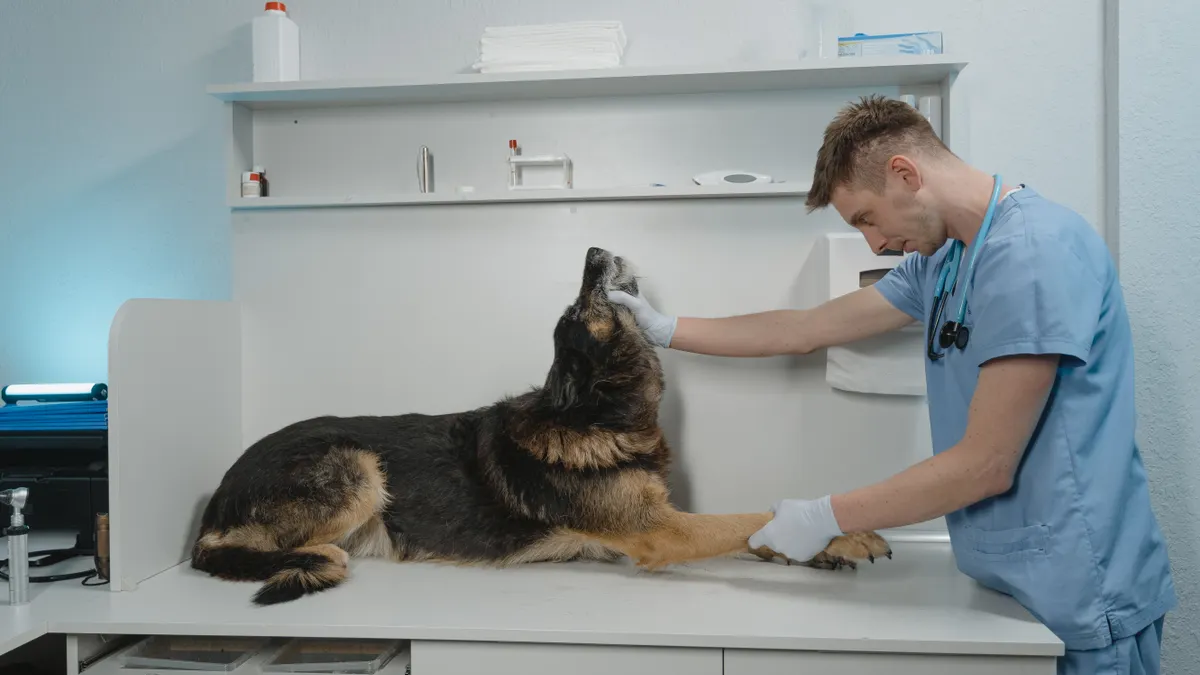
You can check whether a policy is likely to cover an emergency visit by reading the contract in a fixed order. That takes about 10 to 20 minutes if the wording is clear and longer if the policy uses endorsements or add-ons.
- Find the section on accident and illness benefits. Open the plan wording and locate the coverage section that names accidents, illnesses, or emergency care. Verify the policy actually covers those categories, not just wellness or preventive care. A problem sign is a plan that mentions only routine services, vaccinations, or annual exams.
- Look for the ER exam fee language. Search for terms such as “exam fee,” “consultation,” “triage,” or “emergency room fee.” Verify whether the plan pays this line item directly, excludes it, or covers it only when paired with another covered treatment. A problem sign is wording that excludes “veterinary exam fees” without any exception.
- Check the waiting period dates. Find the waiting period for accidents and illnesses, which is often written in days. Verify the emergency happened after that window ended. A problem sign is care received during the waiting period, because that claim is usually denied even if the diagnosis is serious.
- Confirm how hospitalization is treated. Look for “hospitalization,” “inpatient care,” “ICU,” or “nursing care.” Verify whether overnight monitoring, oxygen support, and cage rest are reimbursable when medically necessary. A problem sign is a policy that covers surgery but excludes room-and-board style hospitalization charges.
- Separate diagnostics from treatment. Identify X-rays, ultrasound, lab work, and pathology. Verify whether the insurer covers diagnostics used to diagnose a covered condition. A problem sign is a policy that covers treatment only after diagnosis but excludes the tests needed to reach that diagnosis.
- Check surgery language for the emergency hospital setting. Some plans cover surgery but only if it is medically necessary and tied to a covered condition. Verify whether anesthesia, surgical supplies, and post-op monitoring are included. A problem sign is a surgery benefit that excludes procedures done in an emergency setting or at an out-of-network hospital.
- Review deductibles, reimbursement rate, and any per-condition limits. Verify how the deductible applies to one emergency visit and whether the reimbursement percentage is applied after the deductible. A problem sign is a plan with a fine-print limit that cuts off coverage after a certain dollar amount, even if the emergency continues.
- Look for exclusions that change emergency claims. Pay attention to preexisting conditions, elective care, breeding-related care, and anything the policy classifies as non-covered. Verify the emergency was not caused by an excluded condition. A problem sign is a symptom that has been documented before the policy start date and now reappears in the ER.
This process is mechanical, not emotional. The language in the policy controls the outcome more than the urgency of the visit. If the policy is hard to read, a written explanation from the insurer is worth getting before a claim becomes a dispute.
Two sources that can help anchor the reading are the North American Pet Health Insurance Association and your local state insurance department or equivalent consumer regulator, which may publish complaint or policy guidance pages. Those bodies do not rewrite your contract, but they can help you understand common terms and complaint channels.
Does pet insurance cover emergency vet visits in real life?
Usually yes for covered conditions, but not always for every line on the invoice. The most common split is this: the condition and the treatment may be covered, while the emergency exam fee or after-hours charge may be limited or excluded.
That is why the answer depends on what happened at the hospital. A dog that needs X-rays, anti-pain medication, and surgery after swallowing a toy may have a very different claim than a cat seen for vomiting that turns out to be a chronic condition documented before the policy started. The emergency room setting does not override the policy’s contract language.
The shape of the claim also matters. If the insurer treats the ER visit as a single facility fee, that fee may not be reimbursed even when the rest of the treatment is. If the bill is itemized, the covered and non-covered parts are easier to separate. Pet owners sometimes miss this because the discharge summary focuses on medicine and prognosis, while the claim form cares about billing codes and line items.
A common trap is assuming “accident and illness” means “all emergency care.” It does not. It means care that fits the policy’s covered categories and survives the exclusions, waiting periods, and benefit limits. The finer print matters most when the visit is expensive, because emergency bills usually bundle multiple services into one day.
If a plan offers an optional add-on for exam fees, that can change the math, but only if the add-on is active before the emergency. Retroactive fixes are usually not available. That is the core trade-off: broader coverage can cost more, and narrower coverage can leave a larger share of the ER invoice with the pet owner.
When pet insurance will not help much
Some emergency visits fall outside ordinary coverage rules, and the right move is to understand that before relying on the policy. These are the situations that often change the answer:
Waiting period is still open: The policy has not started covering accidents or illnesses yet — The claim is usually denied, even if the pet is treated in an emergency hospital.
Preexisting condition is involved: The emergency traces back to a condition documented before coverage began — The related treatment may be excluded, including diagnostics and follow-up care.
Only the exam fee is being claimed under a plan that excludes it: The bill may be medically necessary, but the policy language still controls — The owner may receive reimbursement for treatment and still owe the visit fee.
The visit is for routine or preventive care: A clinic may be open after hours, but the care itself is not an emergency — The claim may be denied because the service is not an eligible accident or illness.
The policy has reached a benefit cap or sublimit: Some plans limit what they will pay for certain services — The insurer may reimburse only part of the remaining bill, even if the emergency is covered in principle.
The hospital or service is excluded by contract wording: Some plans distinguish specialty hospitals, urgent care, or certain facility fees — The insured may need to absorb the difference.
These are not reasons to panic; they are reasons to check the policy before assuming help will be there. If the bill is already issued and the language is unclear, asking the insurer for a written claim explanation is the cleaner next step than guessing.
Common mistakes that turn an emergency claim into a surprise bill
The biggest mistakes are usually about reading the bill too quickly. Emergency medicine is stressful, and insurance language is easy to skim past.
-
Assuming the ER visit itself is one covered item. The consequence is a denied exam fee or after-hours charge. The better move is to inspect each line: exam, diagnostics, medication, surgery, hospitalization.
-
Waiting until after the pet is treated to ask what the policy says. The consequence is a claim that looks covered but was never eligible because of the waiting period or an exclusion. The better move is to read the benefit section before an emergency happens.
-
Ignoring the invoice detail page. The consequence is missing which services were billed separately, such as oxygen or ICU monitoring. The better move is to request an itemized invoice and discharge summary.
-
Assuming a higher reimbursement percentage means full coverage. The consequence is underestimating the deductible, annual limit, or excluded exam fee. The better move is to calculate the likely payout based on the actual policy terms, not the headline percentage.
-
Overlooking prior medical notes. The consequence is a claim denial tied to preexisting-condition language. The better move is to review prior records if the same symptom has appeared before.
-
Mixing emergency care with wellness coverage. The consequence is filing the wrong kind of claim and delaying reimbursement. The better move is to classify the service correctly before submitting paperwork.
The pattern is simple: the policy pays for covered treatment, not for confusion. A careful read of the contract and the invoice is usually worth more than a hopeful assumption.
What to do before the emergency happens
Emergency coverage is easiest to understand before the dog is limping at midnight or the cat is breathing hard at 2 a.m. A 15-minute review now can save a messy dispute later.
First, save the insurer’s claim instructions in a notes app or email folder. Look for whether claims need an itemized invoice, medical records, discharge notes, and the original paid receipt. If the plan says submissions must happen within a set number of days, note that deadline.
Second, ask your regular veterinarian how they document emergencies and referrals. Good records help show whether a condition is new, acute, or a continuation of something existing. That matters because insurers often review the treatment notes, not just the summary line on the bill.
Third, know the nearest emergency vet and their billing setup. Some hospitals require payment at discharge, and some can send records directly to the insurer. That affects cash flow, even when coverage is available.
Fourth, keep a copy of the policy declaration page and any add-ons. If the plan includes an exam-fee rider or a specific emergency benefit, the declaration page is often the fastest place to confirm it.
One practical benchmark is this: if you cannot quickly find the waiting period, deductible, and exam-fee rules, the policy is not emergency-ready.
Drafted with AI; not yet reviewed by a person.