Last updated: October 20, 2026
Key Takeaways
- A senior pet with arthritis may still qualify for new, unrelated coverage, while the arthritis itself is often excluded.
- Yes, though the plan may exclude arthritis, limit orthopedic claims, or request records before issuing coverage.
- Have the pet’s records, the policy wording, and a treatment list ready before you apply.
- Compare diagnosis date, exclusions, treatments, and claims wording in that order.
A senior pet with arthritis can sometimes be insured, but the arthritis itself is usually the hard part, not the age alone. In Can You Get Pet Insurance for a Senior Pet With Arthritis? the real question is often whether the policy will cover future accidents or new illnesses while excluding the already-diagnosed joint problem, its flare-ups, and related treatment.
This guide is for someone who already knows their dog or cat has arthritis or osteoarthritis and wants to understand what pet insurance can still do after diagnosis. It assumes you are comparing policies, reading exclusions, and trying to figure out whether pain control, x-rays, physical therapy, NSAIDs, or joint supplements might ever be reimbursed. This information is not financial advice; a qualified adviser should be consulted for your own situation, because policy terms, age limits, and underwriting rules differ by insurer and country. For background on definitions and treatment, see the American Veterinary Medical Association and the Merck Veterinary Manual.
What a senior pet with arthritis can still be insured for
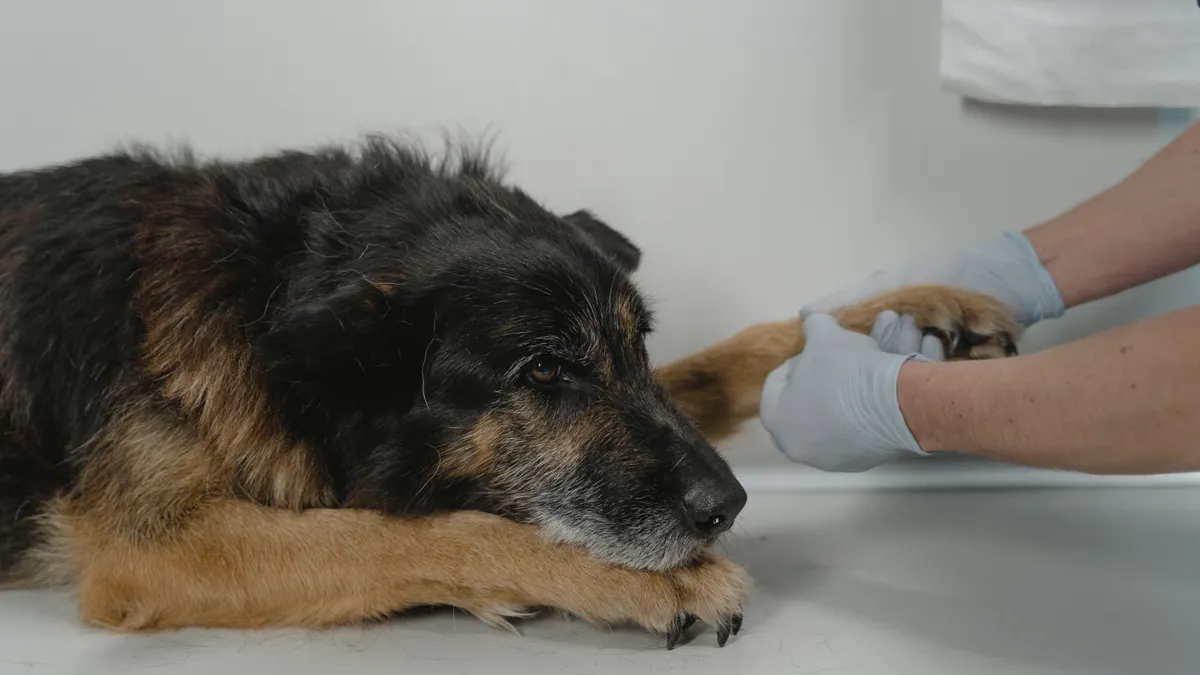
A senior pet with arthritis can still qualify for coverage on new, unrelated problems, but the arthritis diagnosis itself is often carved out. That usually means the insurer may agree to cover future claims for things like a broken nail, a stomach issue, or a cancer diagnosis if the policy is otherwise active, while excluding treatment tied to the joint disease. The key phrase to look for is a joint disease exclusion, meaning the insurer will not pay for claims related to that musculoskeletal condition. For a policy explanation, consult the insurer and your veterinarian before you buy.
This is where many readers get tripped up: insurance is not all-or-nothing. A dog with documented osteoarthritis in one hip may still be covered for a new bladder infection after enrollment, but not for hip pain, follow-up x-rays of the affected joint, or medications prescribed to manage that arthritis. A cat with arthritic elbows may be insured for an unrelated dental injury, while the elbow work stays outside the policy.
The practical limit is diagnosis timing. If a vet record already shows limping, stiffness, joint degeneration, or a radiology report describing osteoarthritis before the policy starts, the insurer will usually treat that as pre-enrollment history even if the pet still “seems okay” on some days. Generic articles often stop there and leave readers thinking the answer is simply no. That is too blunt. The real answer is: yes, coverage can still exist, but the arthritis-related part is usually the excluded part. If you are unsure how the record will be read, consult the insurer or your veterinarian and review the policy wording.
For a broader overview of age-related coverage questions, I’d point readers to the hub on pet insurance for senior pets, since that page covers the larger age-and-underwriting picture. This article stays focused on the arthritis piece and what remains potentially relevant after enrollment.
Can you get pet insurance after an arthritis diagnosis?
Yes, but the policy may exclude the arthritis, limit orthopedic claims, or ask for medical records before it accepts the pet. Insurers use underwriting rules to decide whether to issue coverage and on what terms. Underwriting is the review process that checks age, breed, diagnosis history, medications, and exam notes before a policy is issued or renewed. For underwriting basics, see the NAIC consumer resources and the insurer’s own policy documents.
The first step is to gather the exact language from the pet’s record. Look for the date of the first mention of stiffness, lameness, joint pain, restricted range of motion, or the word osteoarthritis. If the record includes x-rays, synovial changes, or a veterinarian’s diagnosis, that matters more than what the pet appears to do on a good walk. A recent diagnosis written in the chart can affect coverage even if the pet is still mobile.
Then check whether the insurer uses a waiting period, a medical history review, or a blanket exclusion. Waiting periods are the time between policy start and when coverage becomes active for certain conditions; they do not erase an existing diagnosis. If the policy says orthopedic conditions are excluded for 12 months, that is very different from a policy that accepts the pet but excludes only the already-diagnosed joint issue. The wording matters, so consult the insurer or a professional before relying on a summary.
Not every company treats arthritis the same way. Some may exclude one limb, one joint, or one disease category. Others may exclude all degenerative joint disease, which is a broader term that can include osteoarthritis and related wear-and-tear problems. That distinction can change whether future claims for mobility support, pain medication, or follow-up imaging are even eligible.
The hard truth: if the goal is to insure the arthritis itself after diagnosis, that is often the wrong expectation. If the goal is to protect against unrelated future veterinary bills while accepting that the arthritic condition is off the table, that is more realistic.
What to check before you apply

You need the pet’s records, the policy wording, and a clear list of current arthritis treatments before you apply. Those three things usually tell you more than the advertising page ever will. A 10-minute claim quote can look promising while the actual contract says something very different. If anything is unclear, consult a veterinarian or licensed adviser before you submit the application.
Start with the veterinary record. Pull the last 12 months of notes if you can, then scan for the first arthritis mention, any x-rays, any pain score, and any medication history. If the pet has received NSAIDs, gabapentin, Adequan injections, physical therapy, weight-management advice, or joint supplements, write each one down. NSAIDs are nonsteroidal anti-inflammatory drugs, the class often used for arthritic pain. A history of use tells the insurer the condition was active enough to need treatment.
Next, read the policy for exclusion language. Look for terms like “bilateral condition,” “pre-existing orthopedic condition,” “cruciate disease,” “degenerative joint disease,” and “chronic condition.” A bilateral condition is one that can affect both sides of the body; some insurers use that language to say a problem in one limb can affect the other side too, even if symptoms are only on one side now. That can matter in arthritis, especially in dogs that compensate with another leg.
Also check whether the policy covers rehabilitation and complementary care. Physical therapy may be called rehabilitation, physiotherapy, or rehab. Joint supplements may be classified as nutraceuticals and excluded unless prescribed under a covered condition. If the policy only pays for accidents and new illnesses, you may still have coverage, but none of the mobility work you hoped would help the arthritis.
Be careful with the phrase “covers arthritis medications.” That can mean very different things. A policy may cover a drug only when prescribed for a covered condition, only after a deductible, or only when used short term after surgery. If the pet’s arthritis is excluded, the same pill can become non-reimbursable even if it would otherwise be covered for another diagnosis.
How to compare policies step by step
The best comparison is usually a records-first comparison: diagnosis date, exclusion language, treatment list, and claims wording, in that order. Do not start with the premium. A lower monthly price means very little if the policy excludes the exact problem you are trying to manage.
- Write down the arthritis history. List the first symptom date, the diagnosis date, the affected joint or joints, and any x-rays or exam findings. Verify that the notes match the condition you are trying to insure. If the record is vague, “intermittent lameness” can be treated as a warning sign by an insurer.
- List current treatments exactly. Include NSAIDs, supplements, injections, rehab visits, harnesses, ramps, or pain medication changes. Verify the drug names and whether they were prescribed for arthritis. A problem appears if the medication list is incomplete, because missing drugs can make a coverage review look cleaner than it is.
- Check the policy for arthritis language. Search for “osteoarthritis,” “degenerative joint disease,” “musculoskeletal,” and “orthopedic.” Verify whether the exclusion is specific to one diagnosis or broad enough to include related mobility care. A problem appears if the wording excludes “any condition arising from” the joint disease, because that can reach further than the diagnosis name.
- Confirm whether x-rays are part of covered diagnostics. Some policies cover imaging for new conditions but not for excluded ones. Verify whether the policy pays for radiographs, ultrasound, or advanced imaging only when medically necessary for a covered event. A problem appears if the only likely reason for imaging is arthritis monitoring, because that is often excluded.
- Ask how rehab is treated. Physical therapy, hydrotherapy, and laser therapy may be covered under rehab benefits, or not at all. Verify whether a veterinarian referral is required. A problem appears if the policy covers rehab only after surgery, because chronic arthritis often needs non-surgical mobility support.
- Check medication rules for chronic use. Verify whether long-term NSAIDs, pain relievers, or anti-nausea drugs are covered only for eligible conditions. A problem appears if the plan limits prescriptions to 30 days per claim or excludes maintenance drugs tied to chronic disease.
- Review the waiting periods and exam requirements. Some policies require a vet exam within a set window after enrollment, often 14 to 30 days depending on the insurer. Verify that the exam is documented and that no symptoms were noted before the effective date. A problem appears if the exam already records lameness, because that can anchor the exclusion.
- Ask for the exclusion in writing. If the insurer agrees to issue a policy, request the exact excluded diagnosis and body part in the quote or declaration page. Verify the wording before paying. A problem appears if the exclusion is only described verbally, because verbal summaries can be narrower than the contract.
This process sounds fussy because it is. Arthritis claims often turn on one sentence in the record or one phrase in the contract. A 20-minute check now can save a lot of guesswork later.
Will pet insurance cover arthritis medication?
Sometimes, but only if the medication is tied to a covered condition under the policy terms. If the arthritis is excluded, the medication used to treat it is usually excluded too, even when the drug itself is common and legitimate. That includes many NSAIDs, some pain medications, and certain supportive drugs prescribed for mobility or inflammation. If the rule is unclear, ask the insurer or a veterinarian to explain it before you file a claim.
The distinction matters because pet owners often assume the drug name controls the claim. It does not. The reason for the prescription controls it. Meloxicam, carprofen, and similar medications may be reimbursable in one context and not in another. If the vet prescribes a pain medicine for an excluded arthritic knee, the claim can be denied even though the same medicine might be covered after a covered injury or surgery.
Joint supplements are usually even less predictable. Glucosamine, chondroitin, omega-3 products, and similar supplements may be labeled as supportive care rather than treatment. Some insurers exclude supplements outright; some cover them only if prescribed and billed by a veterinarian; others do not reimburse them at all. The safest assumption is that supplements are not the same as prescription medication in an insurance contract.
Physical therapy is another gray area. A rehab session may be covered if the policy includes rehabilitation benefits and the underlying diagnosis is covered. If the arthritis is excluded, the rehab often becomes excluded too, even when it clearly helps the pet move more comfortably. That is why the policy language around “covered condition” matters more than the therapy name.
If you need certainty, ask the insurer to answer a simple written question: “Would this medication be reimbursable if prescribed for the pet’s documented arthritis?” The written response is more useful than a general marketing page. If the answer depends on diagnosis, body part, or timing, that tells you the policy is unlikely to help with the existing arthritis.
When the standard answer stops working
The standard answer stops working when the record is messy, the arthritis is severe, or the insurer uses broad orthopedic exclusions. In those cases, the right move is to get the exact contract language reviewed, because the difference between a narrowed exclusion and a broad one can decide the entire claim path.
The pet has no formal arthritis diagnosis yet, but the chart shows repeated limping: this may still be treated as an undeclared pre-enrollment problem — ask for the insurer’s underwriting decision before assuming coverage will apply.
X-rays already show osteoarthritis before enrollment: that is strong evidence of a pre-existing joint disease — expect the affected joint or related mobility care to be excluded.
The pet is already on long-term NSAIDs or regular rehab visits: ongoing treatment shows the condition is active — a policy may still issue, but the arthritis-related claims are unlikely to be payable.
The insurer uses a blanket orthopedic exclusion: this can catch more than one joint and may reach related mobility issues — do not assume a single-limb problem is the only excluded part.
The plan offers accident-only or accident-and-illness coverage with narrow exclusions: the arthritis may still be excluded while unrelated illnesses remain eligible — check whether the premium just buys coverage for problems other than the one you need.
The pet’s pain changes suddenly or the limp worsens quickly: that may signal something beyond routine arthritis, such as injury or another disease — get a veterinary workup before trying to force the claim into an arthritis label.
If the policy decision turns on claim wording you cannot parse, a veterinarian familiar with the pet’s record or a qualified adviser who understands the contract can help interpret the paperwork. That is especially true when x-rays, mobility changes, and medication history overlap.
The mistakes that cost people coverage
The biggest mistake is assuming a pet can be “fully insured again” after the arthritis diagnosis. That often leads to disappointment at claim time. The better alternative is to treat the arthritis as the likely excluded condition and judge the policy on what it still covers.
Another mistake is hiding the diagnosis or leaving it out of the application. That can create a rescission problem, meaning the insurer may cancel the policy or refuse a claim because the disclosure was incomplete. The safer path is to disclose what the record already shows and let the insurer decide.
A third mistake is relying on the pet’s good days instead of the medical record. A dog that runs to the door one morning can still have documented osteoarthritis in the file. Insurers care about the record, not the pet’s mood on application day.
A fourth mistake is assuming supplements are automatically covered because they are “health-related.” Many plans treat joint supplements as optional care, not insured treatment. The alternative is to check whether the product must be prescribed, whether it must be dispensed by a veterinarian, and whether the policy treats it as a covered item at all. For a fuller policy review, compare this with pet insurance claims and dog insurance waiting periods.
Drafted with AI; not yet reviewed by a person.